
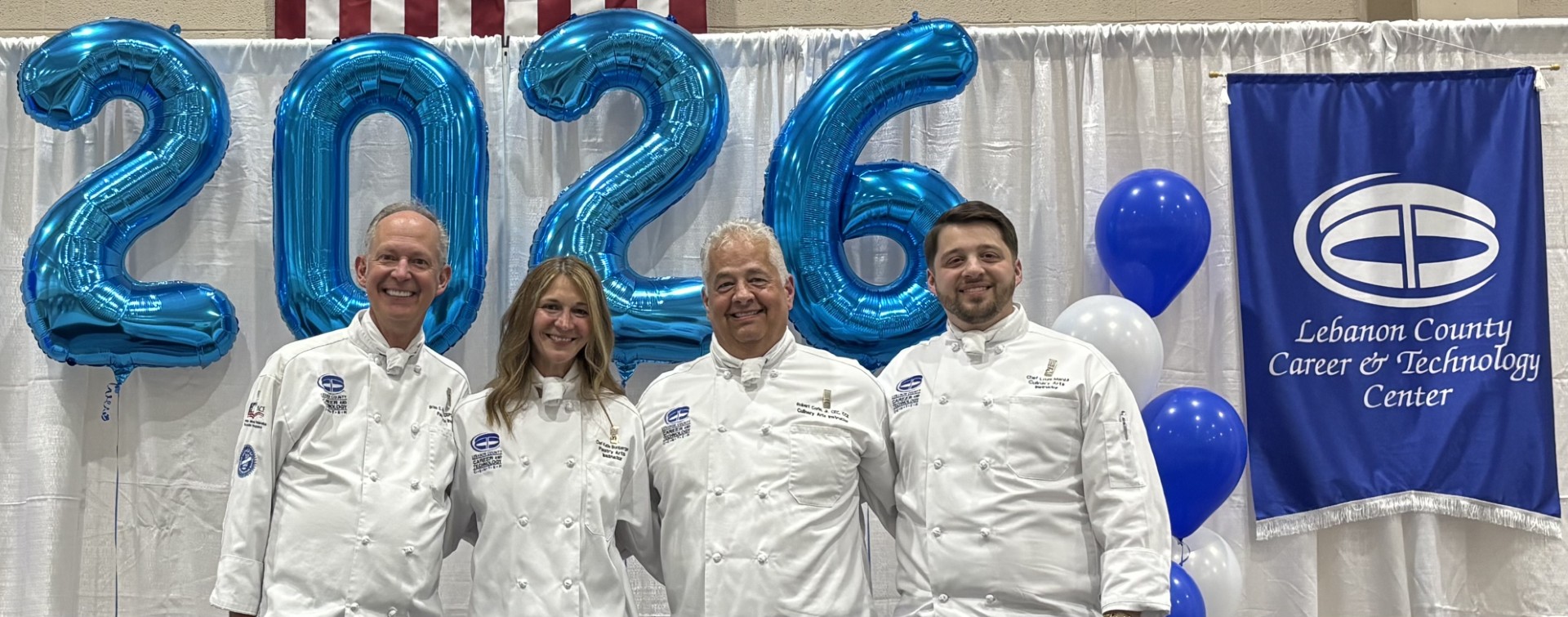
For the first time in more than 30 years, Chef Brian Peffley and Chef Robert Corle looked into a Lebanon County Career and Technology Center classroom and saw a group of students who weren’t theirs.
Standing at the front of the room were the two educators now leading the program: Chef Katie Bomberger and Chef Louis Manza, both former students who once sat in those same seats, wore the same uniforms, and learned under the same high expectations.
It was a moment decades in the making.
The students had become the teachers.
The apron had been passed.
NOCTI spoke with the four educators to reflect on the program’s legacy, the relationships that shaped their careers, and what it means to see former students return as teachers.
The People Behind the Legacy
Career and technical education (CTE) is often measured by certifications earned, competitions won, or careers launched. But at its heart, CTE is about people and the relationships that shape lives long after graduation.
For Peffley and Corle, that work spanned more than three decades.
The two first crossed paths as apprentices at The Hotel Hershey before eventually building nationally recognized culinary and pastry programs at Lebanon County CTC. Along the way, they developed a reputation for excellence, professionalism, and an unwavering commitment to students.
What they never expected was that two of those students would one day return to carry the program forward.
Bomberger graduated from the pastry program in 2004. Manza completed the culinary program several years later. Both served as class presidents. Both competed through SkillsUSA. Both stood out as leaders among their peers.
When retirement approached, Peffley and Corle hoped alumni might be interested in continuing what had been built.
They found exactly that.
“It’s nice to have alumni come in and take over,” Corle said. “Not forgetting where they came from, but adding something new to the future.”
More Than Culinary Skills
Ask Bomberger and Manza what they remember most about what their instructors taught them, and the answer begins with much more than cooking.
Professionalism.
Work ethic.
Accountability.
Respect.
“We knew what they had built,” Bomberger said. “We knew the expectations. We knew the level they had their students reach every year and the professionalism they taught. They instilled that in us.”
After graduation, Bomberger worked in the industry before eventually becoming an elementary educator, where she spent more than a decade teaching students. Yet she found herself returning again and again to lessons she learned as a CTE student.
“The skills Chef taught me when I was 17 years old, I still use today,” she said. “Those foundational skills never leave you.”
For Manza, the program helped launch a culinary career that included formal postsecondary education, work in acclaimed kitchens, and leadership positions throughout the industry.
“Chef Corle and Chef Peffley set me on the path I was going to follow for the rest of my career,” he said. “The atmosphere of professionalism, work ethic, and positive attitude applies to every career. You can take those soft skills anywhere.”
Today, both educators carry that same philosophy into their classrooms.
The program’s emphasis on industry expectations has also included opportunities for students to demonstrate what they know and can do through industry-recognized credentials, including NOCTI/ACF culinary assessments.
“We don’t need every student to become the next celebrity chef,” Manza said. “We want them to leave this program employable, professional, and prepared for whatever path they choose.”
A Mentor’s Greatest Reward
For educators, success is rarely immediate.
Sometimes it takes years, even decades, to understand the impact of a lesson, a conversation, or a vote of confidence.
Over the years, Peffley watched her grow from a dedicated pastry student into an accomplished educator who built a successful teaching career of her own. Long after graduation, they remained connected, supporting one another through personal and professional milestones.
“It’s been a blessing to watch her grow through life,” Peffley said. “Even after all these years, we’ve stayed in touch. Our lives have crossed paths again and again, and it’s enriched my life tremendously.”
Similarly, Corle remembers Manza’s relentless drive, leadership, and passion for the culinary profession.
“When Louis came through the door, there was something different about him,” Corle recalled. “His work ethic was unmatched.”
That sentiment reveals something powerful about CTE. The relationships built through CTE often transcend the classroom. Instructors become mentors. Students become colleagues. Over time, they become trusted friends.
Carrying Forward a Culture of Care
Throughout the conversation, Bomberger repeatedly returned to the responsibility that comes with carrying the program forward.
Not the legacy of a program.
The legacy of people.
“When students walk into our kitchens and put on that uniform, they’re responsible for carrying on the legacy,” she said. “We can teach them the skills, but ultimately they’re responsible for continuing the legacy of greatness.”
That legacy extends beyond recipes and technical competencies.
Bomberger remembers instructors who taught high expectations while also making time for students who needed support.
“They were there for us academically, but also socially and emotionally,” she said. “They always had our backs.”
Those lessons now guide her own approach as an educator.
“I want to create the same memories for my students that I have with these chefs,” she said.
For Manza, that responsibility shows up in the standards he sets every day.
“The students are going to feed off the energy we give them,” he said. “We’re ready. We’re professional. We’re prepared. And that’s what we expect from them.”
The Ripple Effect of CTE
The story of these four educators is bigger than a single culinary program.
Over the years, hundreds of students have moved through the kitchens at Lebanon County CTC. Some became chefs, restaurant owners, and bakers. Others pursued careers in healthcare, education, business, and countless other industries.
Many still point back to the same lessons.
Work hard.
Show up prepared.
Treat people with respect.
Maintain high standards.
As Corle reflected on decades of teaching, he described the role he and Peffley tried to play in their students’ lives.
“We weren’t just instructors,” he said. “We were facilitators of opportunities.”
Those opportunities continue to multiply. Former students hire former students. Alumni mentor new graduates. Professional networks built years ago continue to open doors.
The impact radiates outward, creating a community that extends far beyond a single school building.
A Full-Circle Future
Knowledge is passed from one generation to the next.
Standards become traditions.
Students become professionals.
And sometimes, the students come back home to teach.
Today, Bomberger and Manza stand in the kitchens where they once learned. They are building upon the foundation their mentors created while shaping a new generation of learners.
Tomorrow, one of their students may do the very same.
The apron has been passed, but the lessons, relationships, and opportunities created along the way continue to reach far beyond the classroom.
For NOCTI, stories like this reflect the lasting impact of CTE—not only in the skills learners develop, but in the educators, professionals, and mentors they become. That impact continues as each generation carries those lessons forward and creates new opportunities for the next.